Did you step into the new year feeling pressured to make big goals—finish a book, land a book contract, build a platform?
For many successful authors, the journey didn’t begin with huge goals. Their writing life began by following their wonder and curiosity.
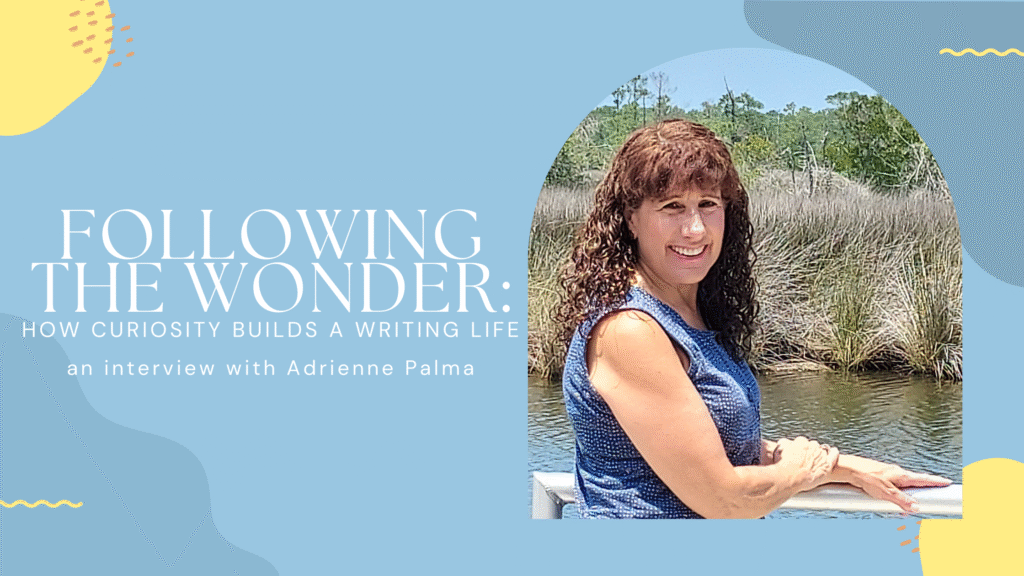
In this interview, children’s book author and educator Adrienne Palma shares how following her sense of wonder has shaped her writing life, especially through research, lifelong learning, and community connections. From writing picture books that are not only factual but engaging to building lasting relationships with bookstores, Adrienne offers practical insights for writers and educators who want to write children’s stories.
Whether you’re just starting out or returning to a project you’ve been working on for years, her journey is a reminder that curiosity is where books begin.
Q: What was your first goal when you started your journey to becoming a children’s book author? Has that changed over time?
A: My first goal was to write a novel. That was in college. I have always enjoyed writing and wanted to write a novel. I still do.
Q: What do you find most rewarding about writing for a younger audience, and what challenges come with it?
A: I love reading to a younger audience. Their eyes are filled with wonder, and they love to ask questions and share about their experiences with sea life and wildlife. The challenge is to write a story that is appealing. My goal is to write stories that are entertaining, educational, and factual.
I love reading to a younger audience. Their eyes are filled with wonder, and they love to ask questions and share about their experiences with sea life and wildlife.
Adrienne Palma
A: Research is a huge part of my writing process. I try to find someone who is knowledgeable about that particular animal or sea creature. And in doing so, I have had the opportunity to meet so many people! From volunteers at the Network for Endangered Sea Turtles (N.E.S.T.), to staff at the NC Aquarium on Roanoke Island, the Alligator River National Wildlife Refuge, the Dolphin Research Center, and ZooTampa, to name a few, these people have provided information and data that I otherwise would not have had.
Q: As an educator who writes, with multiple graduate degrees and a doctorate, learning clearly plays a big role in your life. How has that passion shaped both what you write about and how you approach your storytelling?
As an educator, I have been a lifelong learner. And writing a dissertation really set the stage for comprehensive research and deep dives into the subject. To begin a book, I gather as much information as possible, then break it down between what should be included in the story that will be appealing to children and what should be included in the Fun Facts for those who want to go deeper into learning about the particular sea creature or animal.
Q: What do you hope young readers take away from your books once they turn the final page?
A: First and foremost, I hope young readers develop a love of reading that will remain with them. My goal for my books is to open the door to learning about the particular sea creature or animal, so that they will want to learn more, either from a trip to a public library or seeing the creature firsthand at a zoo or aquarium. It can also be just a fun trip to the beach at night to chase ghost crabs!
First and foremost, I hope young readers develop a love of reading that will remain with them.
Adrienne Palma
Q: When it comes to connecting with your community and sharing your books, what marketing or outreach strategies have been most effective for you?
A: I maintain a good relationship with the local bookstores and organizations and visit them regularly. For those outside of the community, I send follow-up emails to share about upcoming books and to check on book sales.
Q: For educators reading this interview who may be interested in writing their own books, what advice would you offer?
A: Just do it! Write about what you know or research what you would like to write about. Joining a writing group might be good too.
Q: In addition to your children’s books, you’ve also written two novels. Have you noticed differences in what marketing strategies work best for children’s books versus novels—or any overlap between the two?
A: I have not noticed any differences, although I have learned that bookstores gear up for the summer season in May, so that is when I reach out to update them about my books.
Sometimes, writing your picture book can start with asking a question, exploring an area of fascination, or wanting to learn something new. Following your wonder can open unexpected doors—to deeper research, to connections with organizations or other people in the community, and stories that truly resonate with young readers.
As you leave January and its resolutions behind, we hope that you’ll be inspired to give yourself freedom to step into your interests, connect with your community, and learn new things!
Most of all, we hope you’re inspired to write that picture book you’ve always wanted to write.